Leadership & Public Work
Not a list of titles, but an account of what each title actually required — the departments, the committee structures, the constitutional mechanics and the evidence for each.
An office is a set of duties before it is a title. This page describes the duties.
Manmohan Samal has held four kinds of public responsibility: a state party presidency, two seats in the Rajya Sabha, one seat in the Odisha Legislative Assembly, and two departments of the state government held simultaneously. Each carries a different brief, and the briefs are frequently confused with one another in general profiles.
What follows sets out, for each, what the role does — drawn from the constitutional and administrative descriptions of the office itself — and then what the published record shows Samal did in it. Where the record is silent, this page says so rather than filling the space.
Running a state party organisation
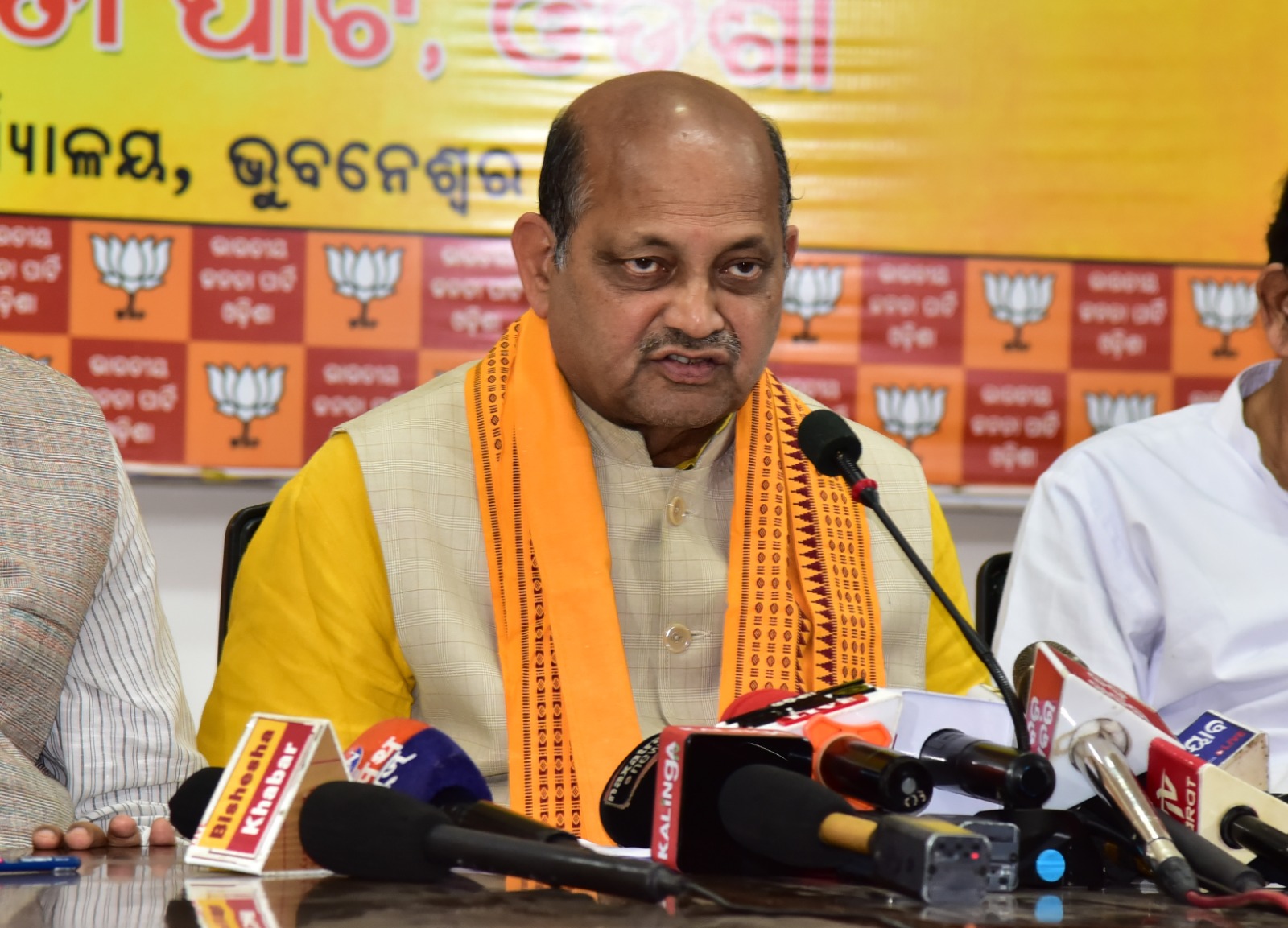
The president of a state unit of the Bharatiya Janata Party heads the organisation, not the government. The brief is internal and continuous: appointing state office-bearers, constituting and supervising district and booth-level committees, running membership and organisational drives, directing the state campaign at election time, and recommending candidates to the party’s central election committee.
Samal has held this office across four terms by the news-agency count, beginning on 14 November 1999 and resuming on 24 March 2023. Contemporary reporting on the 2024 Odisha result attributes a substantial part of it to organisational expansion and grassroots mobilisation carried out under his presidency in the fourteen months between his appointment and the poll.
His most recent confirmation illustrates how the office is filled. Under the party’s ‘Sangathan Parv’ internal election process, he filed the only nomination for the state presidency on 7 July 2025; objections were heard the next morning and the result declared at 11 a.m. on 8 July at the state headquarters in Bhubaneswar, with the Bihar MP Sanjay Jaiswal as the party’s central observer. Thirty-two nominations for the party’s national council were filed from Odisha in the same exercise.
Two departments of the Government of Odisha
From 18 May 2004 to December 2008, Samal held two portfolios at the same time. This is what each administers.
Revenue — and, within it, disaster management
Odisha’s Revenue and Disaster Management Department is one of the oldest arms of the state administration. Its standing responsibilities include the maintenance of land records, land administration and settlement, the operation of revenue courts, the allotment and management of government land, and the state’s relief and disaster response machinery.
That last function is not a formality in Odisha. The state’s coastline sits on the Bay of Bengal cyclone track, and its deltaic districts — including Bhadrak, Samal’s own — face recurrent cyclone and flood. Relief administration in these districts runs through this department. A minister holding the Revenue portfolio in Odisha holds the machinery that reaches households after a disaster.
Food Supplies & Consumer Welfare
The Food Supplies and Consumer Welfare Department administers Odisha’s public distribution system, the procurement of foodgrain, and consumer protection. In a state where a large share of households depend on subsidised foodgrain, the department is the point at which food entitlement becomes an actual delivery.
Holding Revenue and Food Supplies together placed two of the most direct rural-facing departments of the state government — land on one side, food on the other — in the hands of a single minister for four and a half years.
Two houses, and how a seat in each is won
The Rajya Sabha is the upper house of India’s Parliament. Its members from a state are not elected by the general public: they are chosen by the elected members of that state’s Legislative Assembly, by a single transferable vote. A party’s strength in the Assembly therefore determines how many seats it can carry.
Samal has held such a seat twice. The first, from 4 April 2000 to 23 May 2004, followed the coalition’s Assembly strength after the 2000 state election. The second followed the 2024 majority: nominated alongside the sitting member Sujeet Kumar, he was declared elected on 16 March 2026, assumed office on 3 April and took the oath on 6 April.
The Odisha Legislative Assembly seat is the other kind of mandate — direct election by voters in a single constituency. Samal has won one, Dhamnagar in 2004, and lost two contests at Chandabali, in 2019 and 2024. Both constituencies lie in Bhadrak district.
A state president alongside a state government
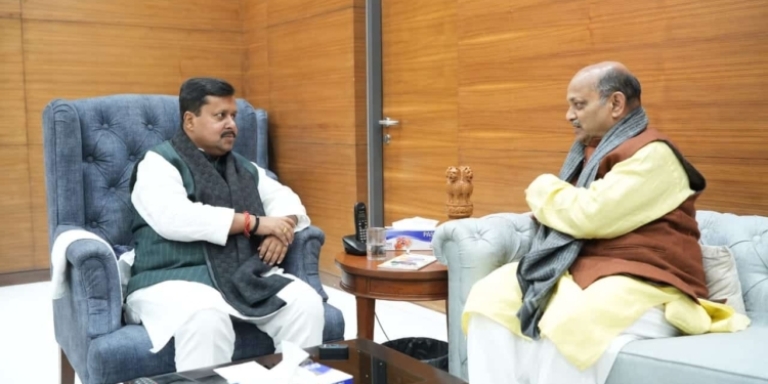
Since June 2024 Samal has occupied a position he had not held before in the same form: leader of a party organisation while that party holds office in the state. Mohan Charan Majhi has been Chief Minister since 12 June 2024, with Pravati Parida and Kanak Vardhan Singh Deo as Deputy Chief Ministers.
In the Indian party system the state president and the chief minister are separate authorities with overlapping constituencies of interest — the one accountable to the organisation, the other to the legislature and the electorate. Reporting from Odisha since 2024 describes frequent joint meetings between the chief minister, the state president and other state leaders directed at strengthening the organisation at booth and panchayat level.
The one occasion on which Samal’s own organisational judgement has been reported in detail concerns the period before the 2024 election. An account published by Odisha Plus in July 2025 states that he argued against a proposed electoral understanding with the Biju Janata Dal, on the grounds that the party’s own workers opposed it. This website reports that as an attributed account rather than as an established fact, because it rests on a single published source.
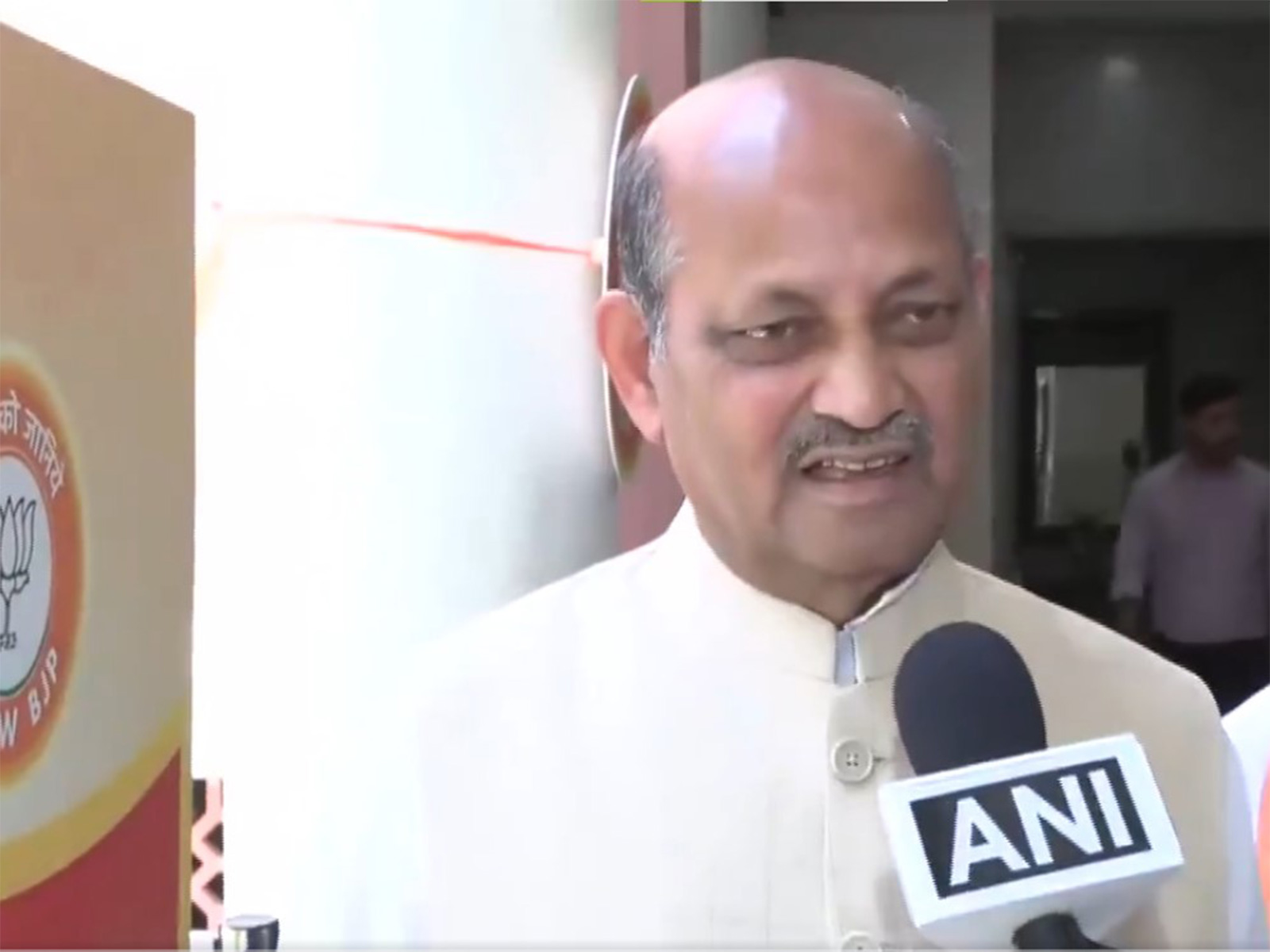
Public representation
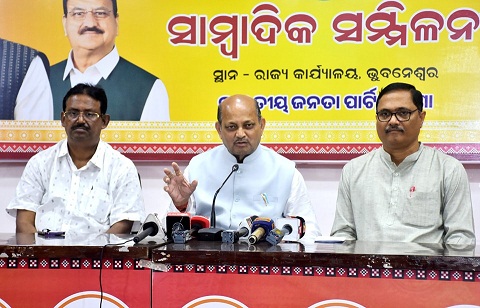
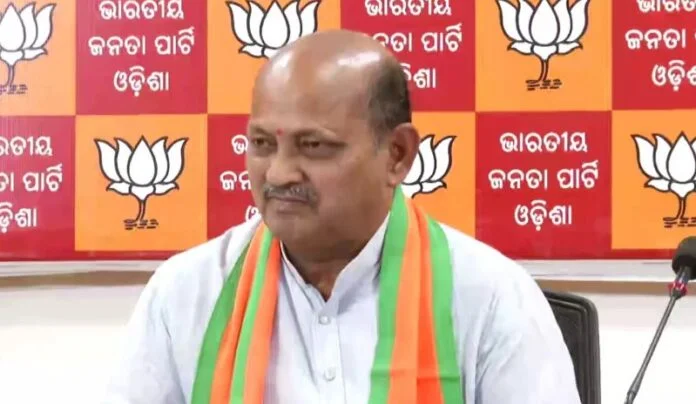
A state president is the party’s principal public voice in the state. In practice that means a continuous cycle of press conferences at the state headquarters, statements on state and national developments, and appearances at district and constituency programmes.
The photographic record on this website is largely a record of that duty: lecterns, microphones, party backdrops, district platforms. It is the least glamorous and most constant part of the job.
Sources for this page
- Government of Odisha, Revenue and Disaster Management Department, for the department’s statutory remit.
- Government of Odisha, Food Supplies and Consumer Welfare Department, for that department’s remit.
- Press Trust of India, July 2025, for term dates, portfolios and the 2024 attribution.
- Pragativadi and Ommcom News, July 2025, for the ‘Sangathan Parv’ process, the central observer and the nomination count.
- Declared results for Chandabali, 2019 and 2024, and for the 2024 Odisha Assembly election.
- News Services Division, All India Radio, and Kalinga TV, for the 2026 Rajya Sabha election and oath.
- Odisha Plus, July 2025, for the attributed account of his position on a pre-2024 electoral understanding.
- Deccan Chronicle, on joint organisational meetings at booth and panchayat level ahead of the Odisha panchayat elections.